
We already know 2024 will be a pivotal year for many companies looking to reach the next level of their business plan. It all hinges on being able to reach prospective customers, convince them that your product is better than what they already have, and generate leads. After all, two-thirds of B2B marketers prioritize lead generation. Increasingly startups and mid-tier companies are realizing that the center of their business strategy has to be content marketing for its ability to connect with customers. Content marketing is harder to do than spending money on Google Ads or trade shows, but it’s the champ that turns fledgling companies into must-have brands. From our real world experience working with clients, from startups to enterprises, we’ve identified seven content marketing strategies you can put to work for your website and company.
Content marketing cuts through the digital noise and speaks directly to your customers. Quality content about your products and services has the potential to quickly communicate your value proposition, features, and benefits—all of the things that your customers need to know in order to take the next step in considering your company. This approach is particularly crucial in a digitally saturated market, where customers are bombarded with a plethora of information.
When content marketing is executed well, it does more than just inform; it connects with the audience on a level that demonstrates a deep understanding of their needs, pain points, and preferences. By aligning product features with the specific challenges faced by customers in a particular industry, companies can demonstrate that they not only understand their audience’s problems but also offer viable solutions.
Content Strategy in Practice: SaaS Company
Consider a company in the software industry that develops project management tools. Through content marketing, such as articles, blog posts, or videos, the company can specifically address common pain points in project management. Topics such as difficulty in team collaboration, challenges in tracking project progress, or issues with resource allocation. Using quality content, the company can subtly showcase how its software’s features—perhaps an integrated communication platform, real-time progress tracking, or resource management tools—directly address these pain points.
This approach does several things:
Before customers decide to buy your product they need to trust you. The way to communicate trust is to show that you understand your customers’ challenges through examples of how your products and services solve them. Too many companies get tied up in promoting themselves before having established credibility for what they do.
Building trust and loyalty through content marketing is a critical strategy for any company seeking to establish a strong relationship with its customers. Trust is a foundational element in the customer journey—without it, convincing potential buyers to invest in your product or service becomes significantly more challenging. Content marketing can be leveraged to build this trust by showing an understanding of customers’ challenges and demonstrating how your products or services provide solutions.
For instance, showcasing real-life examples of how customers use your product can be a powerful way to build trust. This approach goes beyond just telling your audience what your product does; it shows them. When potential customers see tangible proof of your product’s effectiveness and how it addresses problems similar to their own, it creates a sense of reliability and credibility.
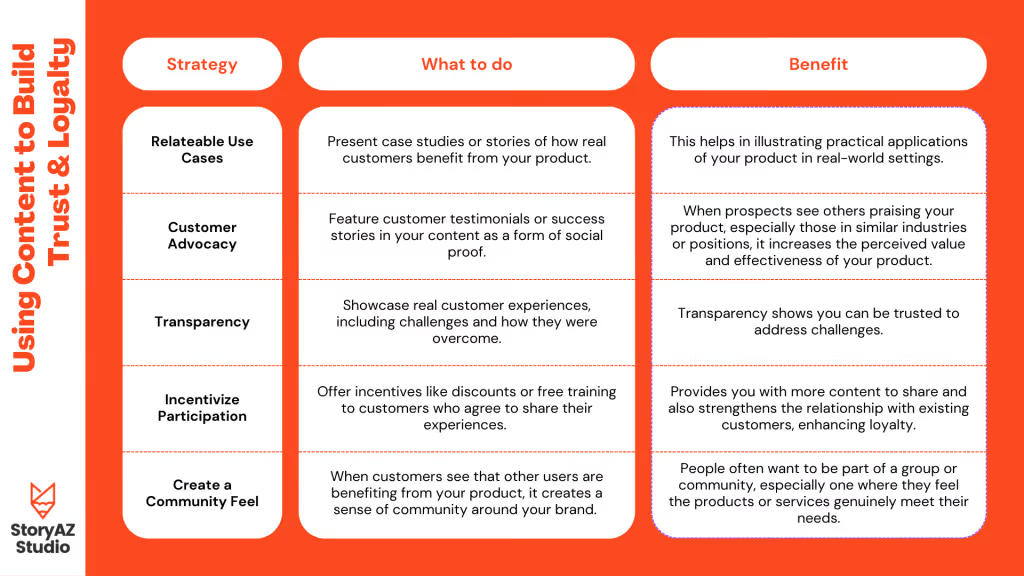
Content Strategy in Practice
In practice, a tech company might publish case studies on their blog detailing how different businesses have integrated their software to streamline operations. A B2B service provider could create video testimonials where clients discuss the specific challenges they faced and how the service provided effective solutions.
Driving engagement through content marketing is essential to grow your audience and, ultimately, your revenue. Engagement isn’t just about getting your audience’s attention; it’s about maintaining it and fostering a relationship that encourages active participation and interest in your brand. Blogs, white papers, videos, and other content formats play a crucial role in this process.
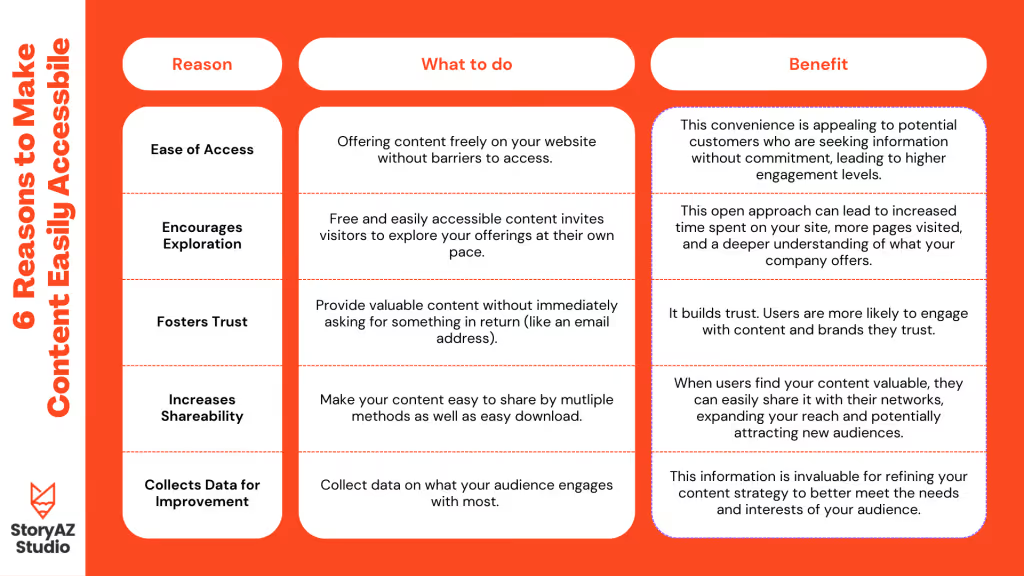
Content Strategy in Practice: Online Project Management
Consider a startup that provides a cloud-based project management tool. By offering a mix of blogs discussing productivity tips, white papers on efficient project management techniques, and tutorial videos on using their tool effectively, they can cater to a diverse audience. By not gating this content, they make it easily accessible, encouraging visitors to explore and engage with their offerings. This approach not only educates potential customers about the product but also establishes the brand as a valuable resource in the project management space.
Educating your audience is a fundamental value of content marketing, particularly in the B2B sector where purchasing decisions are often complex and research-driven. Given that a significant majority of decision-makers conduct thorough online research before making a purchase, content marketing becomes a critical tool in guiding and influencing this decision-making process. 80% to 90% of buyers told one B2B buying survey that they already have a list of vendors in mind before the formal evaluation begins.
Content marketing helps you educate your audience and gives them something to compare to versus other products they are researching. Your future customers rely on your website to educate themselves.
Content Strategy in Practice: Cybersecurity Startup
Imagine a company that specializes in cybersecurity solutions for businesses. To educate its audience, the company could create a series of blog posts covering various aspects of cybersecurity, such as common vulnerabilities, best practices for digital safety, and the latest trends in cybersecurity threats. Additionally, the company could produce white papers offering in-depth analysis of specific cybersecurity issues or case studies that demonstrate how their solutions have helped other businesses improve their security.
The blog posts serve as an accessible entry point for potential customers looking for basic information and tips, while the white papers provide more detailed, technical content for those who are further along in the decision-making process. Case studies, on the other hand, offer real-world examples of the company’s solutions in action, providing tangible evidence of their effectiveness.
The value of content marketing for SEO is immense and cannot be overstated. Quality content is a critical factor in driving website visibility and traffic, as it directly impacts how search engines rank sites. SEO (Search Engine Optimization) is not just about the technical aspects like keywords and meta tags; it’s fundamentally about delivering valuable, relevant content that meets the needs of your audience.
Content marketing, when done effectively, contributes to SEO by providing fresh, relevant material that search engines favor. This includes a variety of content types like blog posts, explainer videos, product comparison briefs, and how-to overviews. By allocating a significant portion of their budget to content marketing, startups can improve their online presence organically, attracting quality leads and increasing the likelihood of conversion.
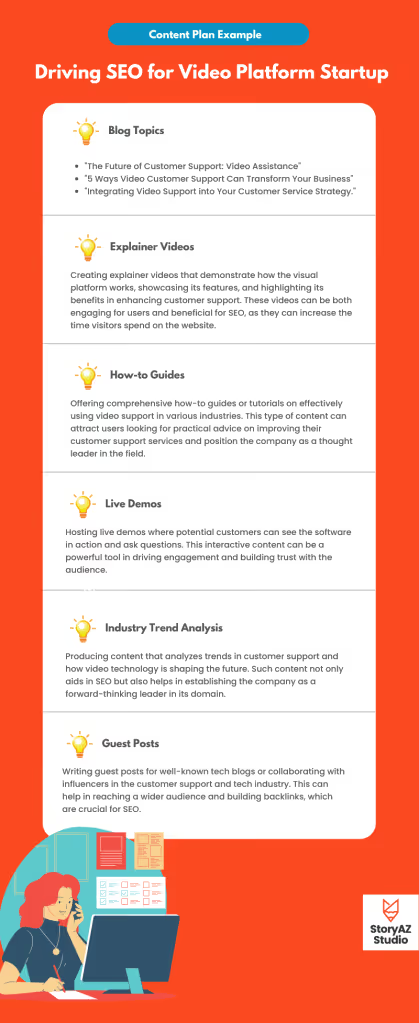
Content marketing is more cost-effective compared to traditional marketing methods. This is particularly true due to the long-term benefits of content marketing and the ability to engage with a targeted audience at a relatively lower cost.
Content Strategy in Practice: Wellness Startup
Consider a startup that develops a health and wellness app. To market their product, they could opt for traditional advertising methods like PPC campaigns, which would require a significant budget for bidding on competitive keywords, design, and ongoing campaign management. However, these costs can quickly add up, and the leads generated might not always be high quality or result in long-term customer engagement.
Instead, the startup decides to invest in content marketing:
Building thought leadership through content marketing is about establishing your brand as a knowledgeable and authoritative voice in your industry. Quality content not only leaves a good first impression but also builds trust in your brand’s point of view. When you consistently provide valuable, insightful content, your audience is more likely to turn to you for guidance in your area of expertise.
Content Strategy in Practice: Professional Services Startup
Imagine an accounting firm specializing in modern bookkeeping and financial advisory services for small businesses and startups. To establish themselves as thought leaders, they might adopt the following content marketing strategy:
As you embark on your content marketing journey, remember that success doesn’t come overnight. It requires consistent effort, creativity, and a deep understanding of your audience. By implementing these seven strategies, you’ll be well on your way to building a robust content marketing framework that not only drives engagement and builds trust but also positions your startup as a thought leader in your industry.
If you’re looking for a content marketing agency you can partner with, you can easily schedule a meeting with us online.
About the Authors
Ren Agarwal serves as the CEO of StoryAZ Studio where he puts his 25 years of strategic marketing expertise towards uplifting and enhancing client brands.
Suyoen Park is a content creator and strategist at StoryAZ Studio. A graduate of UC Berkeley, Suyoen helps clients achieve their business goals through exceptional content marketing.